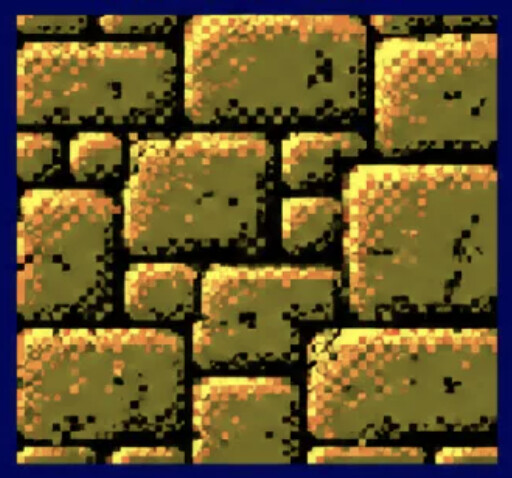
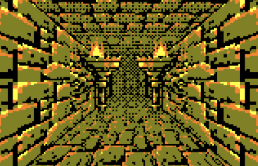
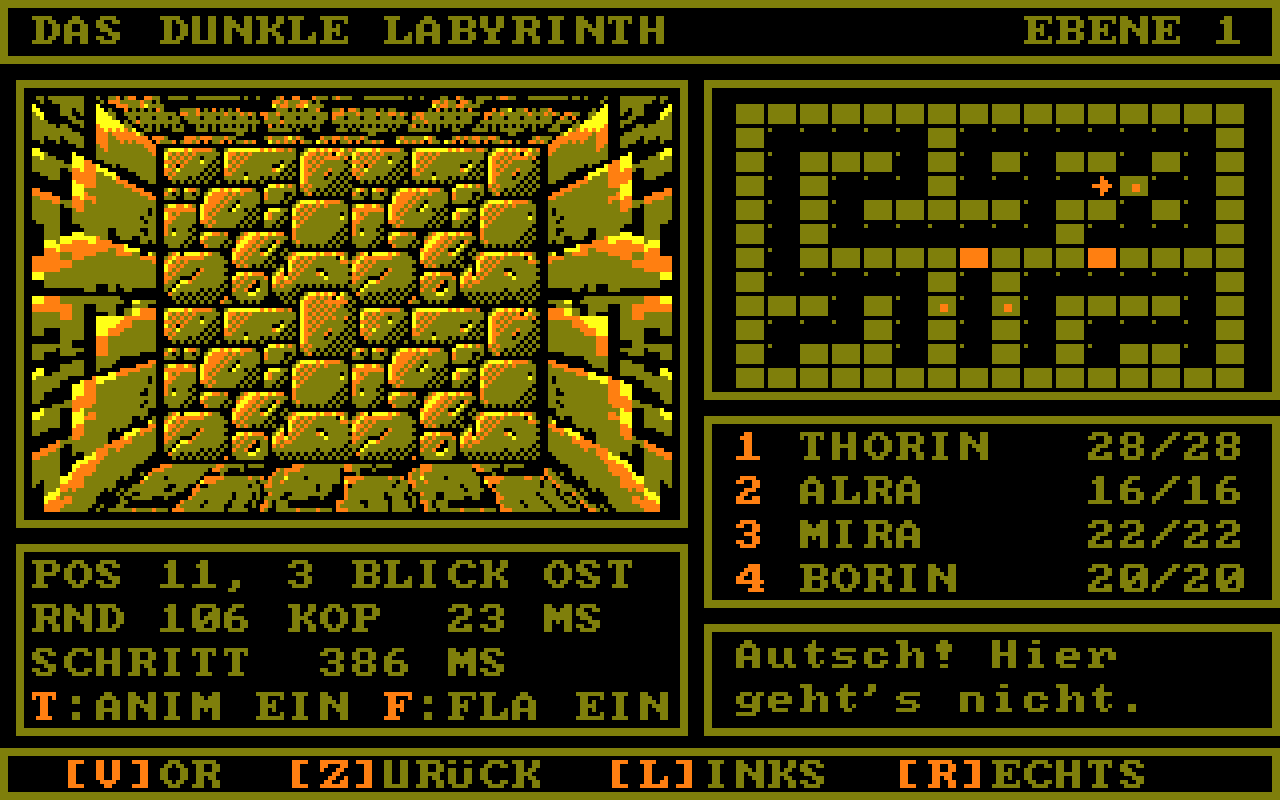
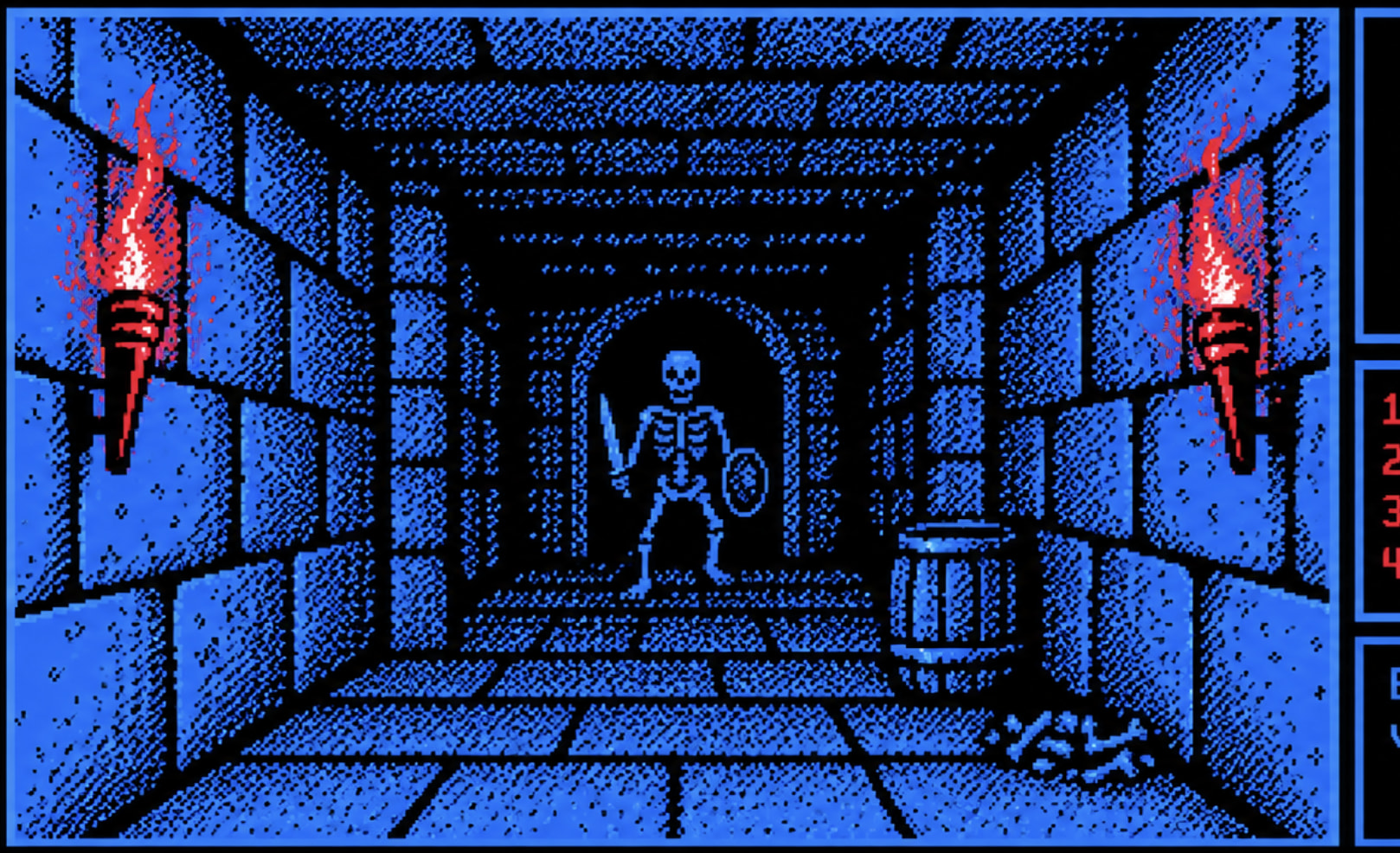
To keep from having to draw too much, I just adjust the perspective of this wall piece.
You can see the spooky result in the attached DSK image.
Animated turning: Furthermore, I really want to see how you turn in the dungeon. Not just a snap to a new image. On the other hand, this has turned out pretty well so far, especially for an 8-bit computer.
In the end, I’ve come to the conclusion that I won’t continue working on this project for now. I’m not sure if anyone would actually play something like this today to solve complicated puzzles—ones that might even require the help of the internet.
I’m sharing the program here as a proof of concept.
This is really very impressive!
The effect is remarkable, especially when it comes to the rotations.
In my opinion, there’s real potential here for making a complete game.
I’d just suggest one improvement to the graphics to get a crisper, clearer look.
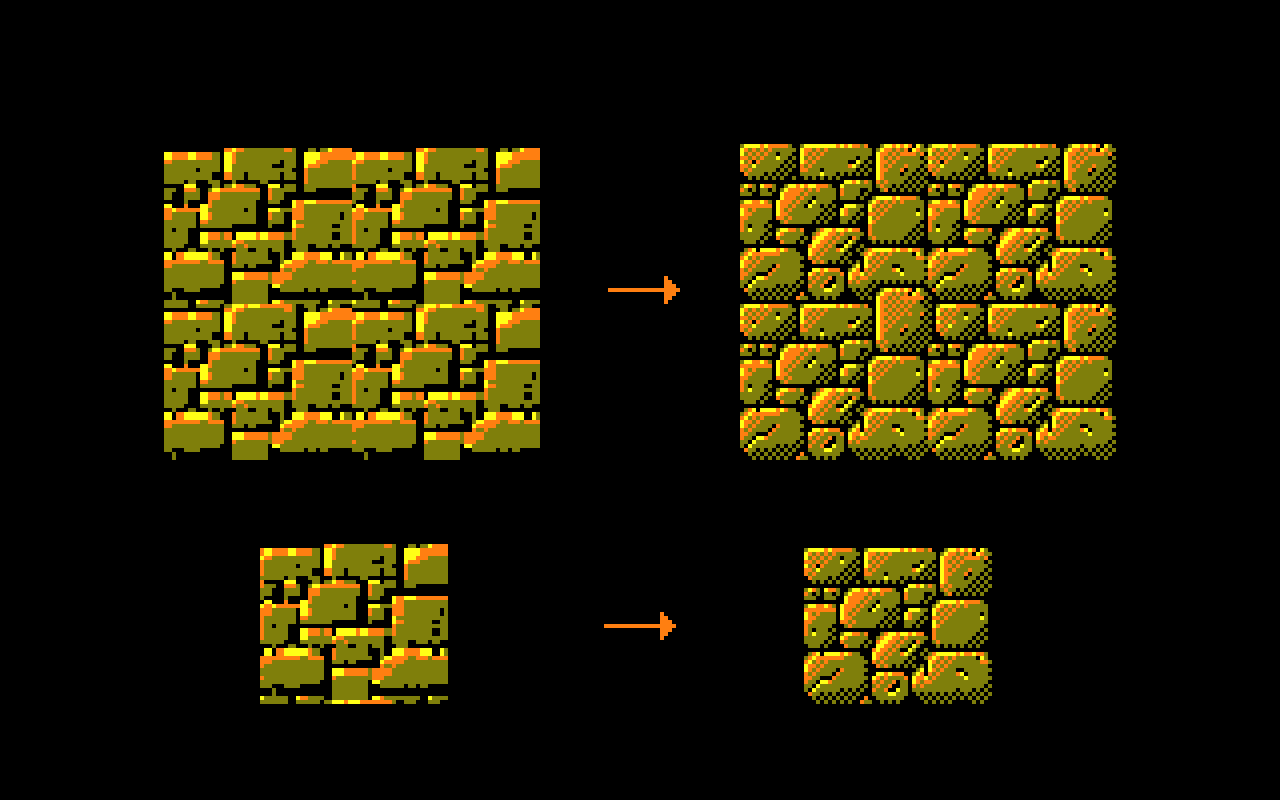
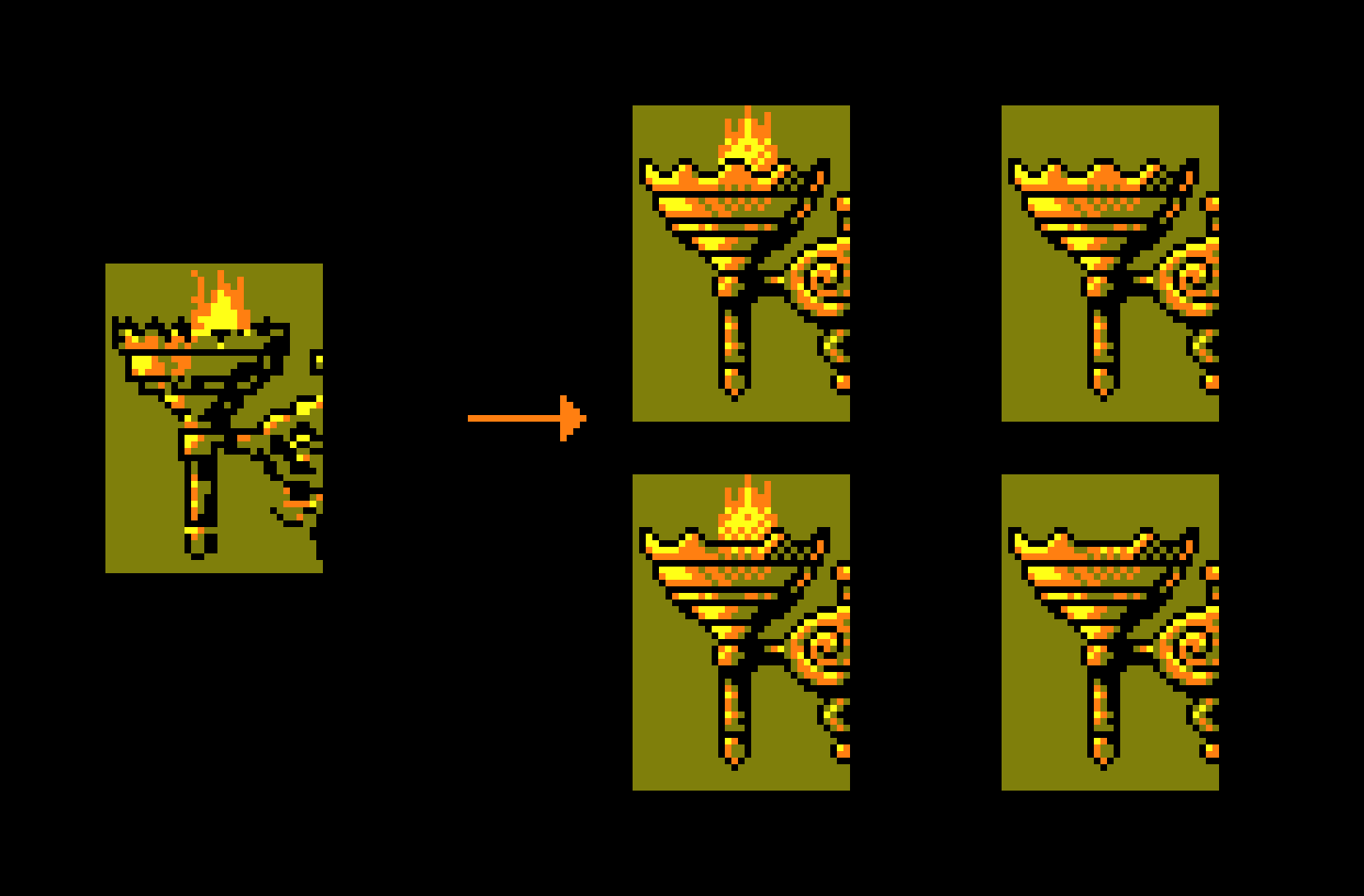
For example, the main wall could be redone using dithering.
I don’t know if your wall is an assembly of 4 smaller parts or if it’s made up of a single large block… So, I made two versions :
That said, I’m not sure how the adjacent 3D walls are generated.
If they’re computed on the fly by the machine, we’d have to see how it handles rendering these new graphics…
If, on the other hand, they’re also built right into the program, it should be possible to rework them as well.
Thanks for your offers of support. Here are a few key points regarding the issues I struggled with:
My goals back then:
3D dungeon
Beautiful graphics
Animated elements
Lighting effects
Great puzzles
My issues:
The step size is way too large. You feel like you’re running through the maze far too fast.
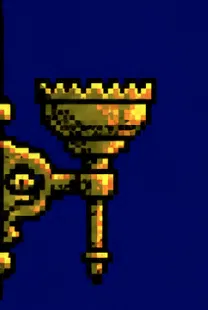
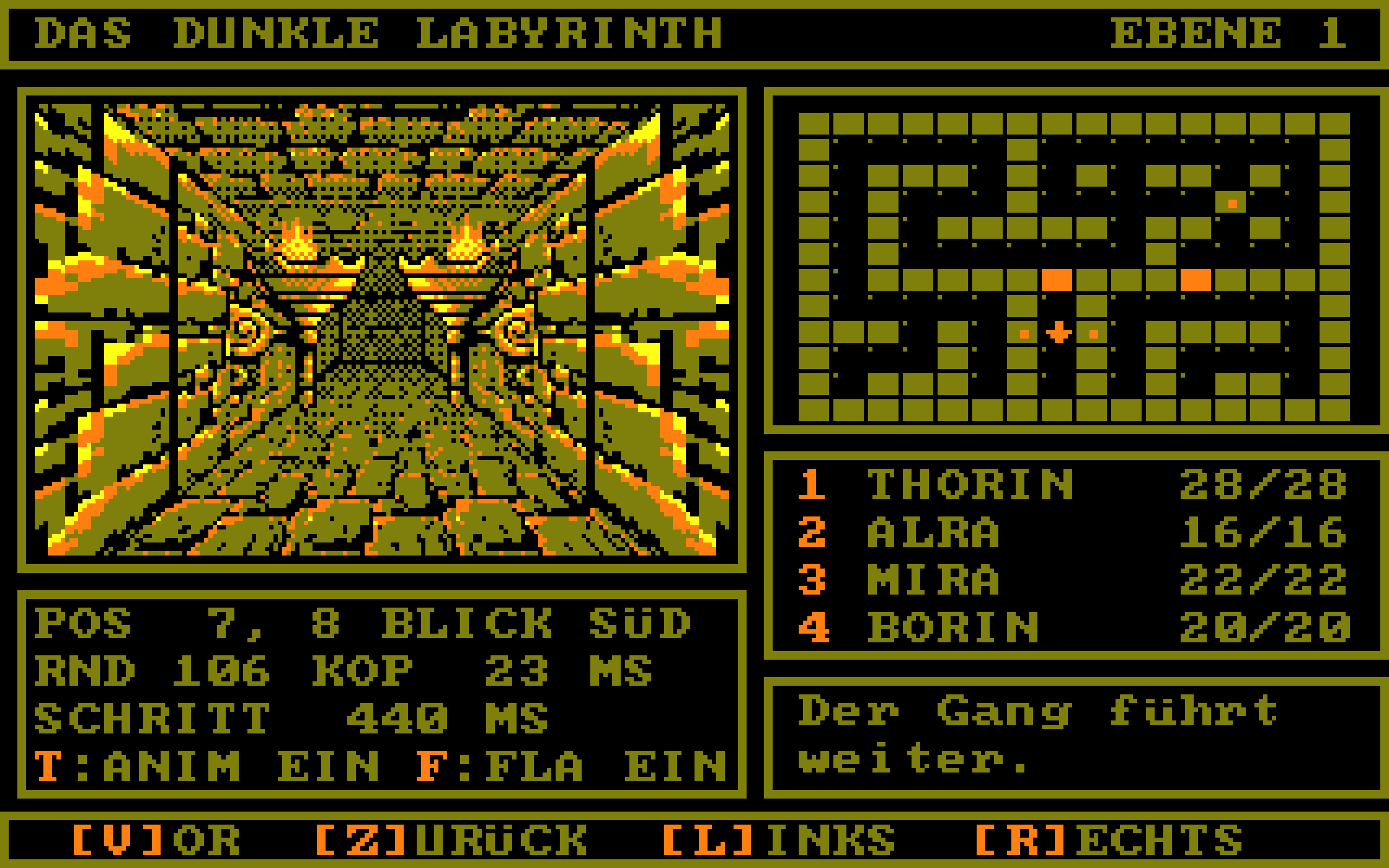
The “raised” elements (see the torch) are out of proportion.
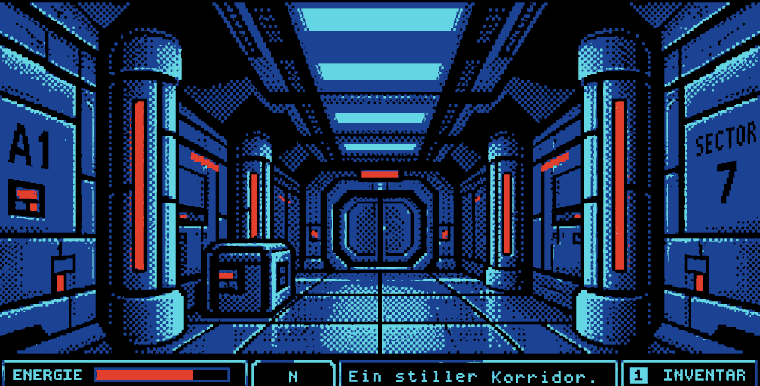
(See my first post on the topic.) The torch is actually a sprite that I placed into the dungeon. I wanted to fill the dungeon with all kinds of objects using this method:
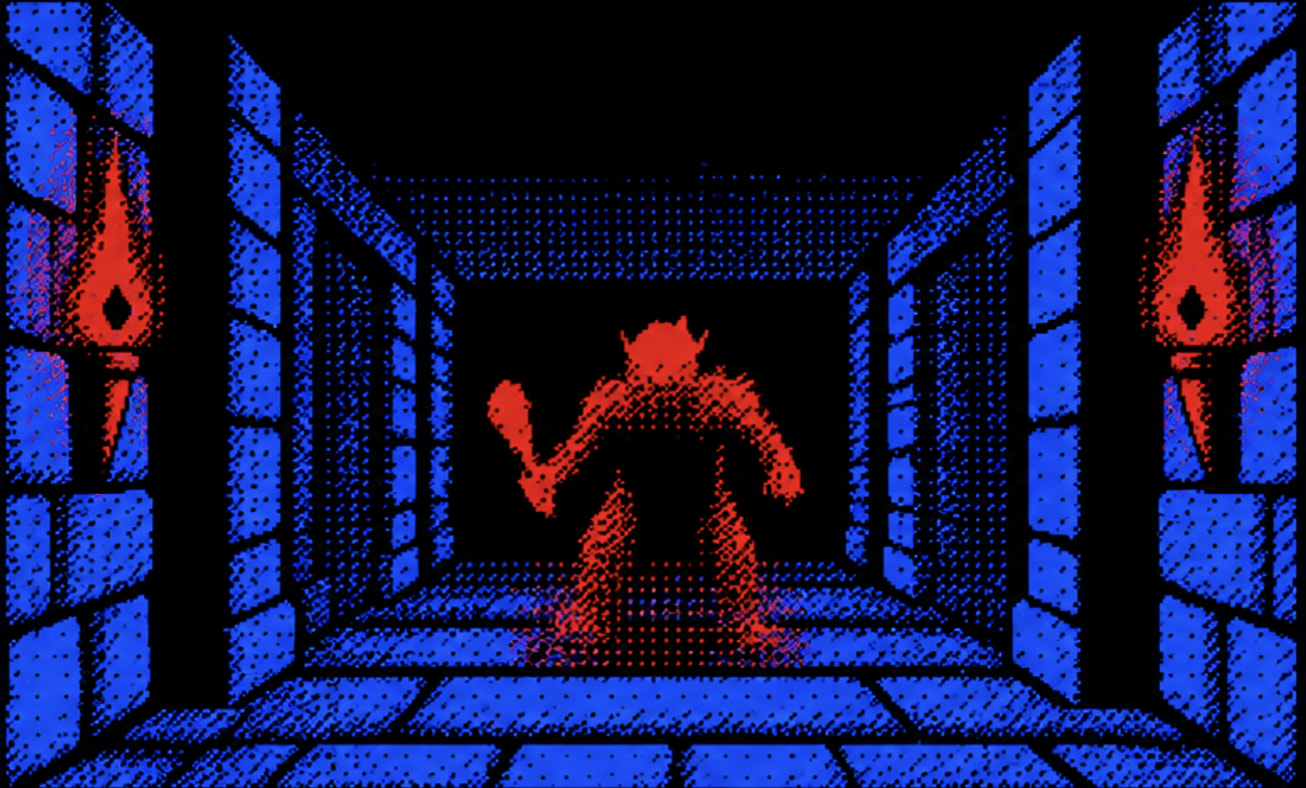
Here are a few photos of an early concept study (Mode 1 with 4 colors)
3-color
If you divide the “depths” into vertical sections, you can place additional objects. See the pillars and the chest here. I think it makes the corridors look more lively.
I really wanted to have a glow of light, which I [did] with flashing PENs
See this example: Here’s one of my first prototypes with the flickering colors:
Problem: “Space requirements” The graphics at the intended quality take up too much memory. Sure, you can pack everything and prepare it in the background for display.
I started scaling the graphics. But it looks bad. You know the result. But the rotation is visualized… Limitation: I can only display corridors.
I’d say yes, as I think it’s beautiful and the movement is quite fluid, but that’s up to you.
And, if you decide to take on it, don’t rush it or stress yourself about, just do it the way you like because that’s what got our attention in the first place.
It depends on what your goal is. Worthwhile goals could be:
Developing and optimizing the graphics engine — a programming task.
Designing graphics for this setting and the chosen window size, and adding effects like glows — an artistic task.
Building an exciting game that features a mechanic or idea no one has ever thought of for a dungeon crawler before.
A little bit of everything, to build your own game from the ground up.
Less worthwhile goals would be:
Building a game to market/sell it. With the current flood of hastily thrown-together games, you would probably get lost in the noise, even with good quality.
Hoping the game becomes a huge hit with hundreds or thousands of players actively discussing it. The reasoning is the same as above: too much competition.
The motivation has to come from within. Things are just too hectic out there right now.